After I removed the wedding dress (see
my previous post), I offered to pack the dress to protect it from damage and harm. What follows is a step-by-step of how to pack a textile, such as a dress.
According to
The Winterthur Guide to Caring for Your Collection (The Henry Francis du Pont Winterthur Museum, Inc., 2000), "Providing good storage is the best thing that anyone can do to preserve their collection." The text goes on to outline general guidelines:
* Do not store textiles in direct contact with wood. The acid from wood can cause embrittlement.
* Use chemically inert, acid-free materials (boxes, rolls, etc.).
* Never store textiles with sharp folds or creases. As fabric fibers age, they become brittle and will break where folded. Use acid-free tissue to pad the folds and creases.
* Small textiles should be stored flat. If you must stack, place the heavier textiles beneath the lighter fabrics, interlacing acid-free tissue.
Packing textiles is fairly simple and based on common sense. You just need the right materials.
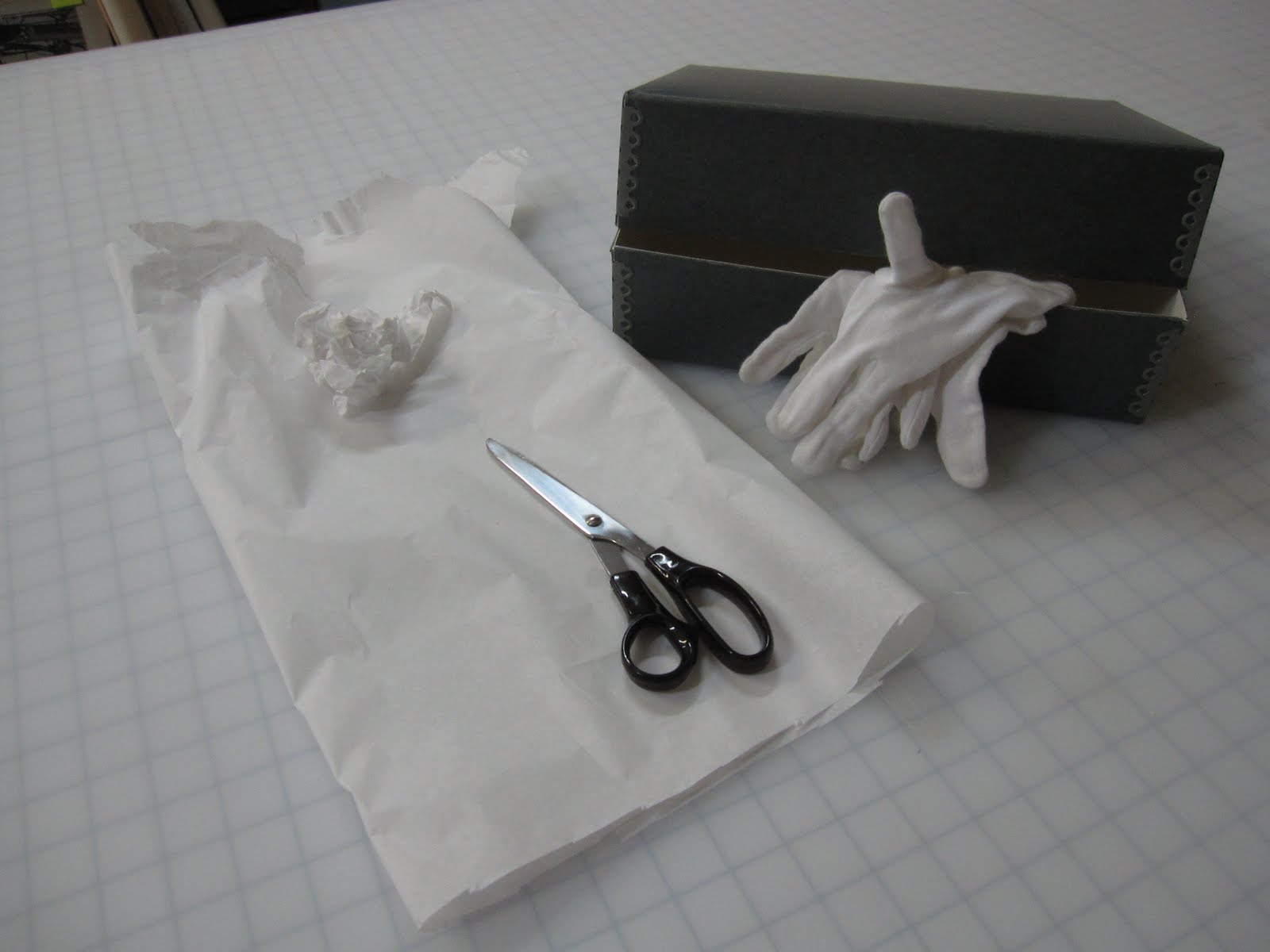
 Acid-free boxes, acid-free tissue, and white cotton gloves are a must. I had the pair of scissors to cut the tissue from a large roll that I have.
 The spread: acid-free box, dress, slip, shoes and other accessories
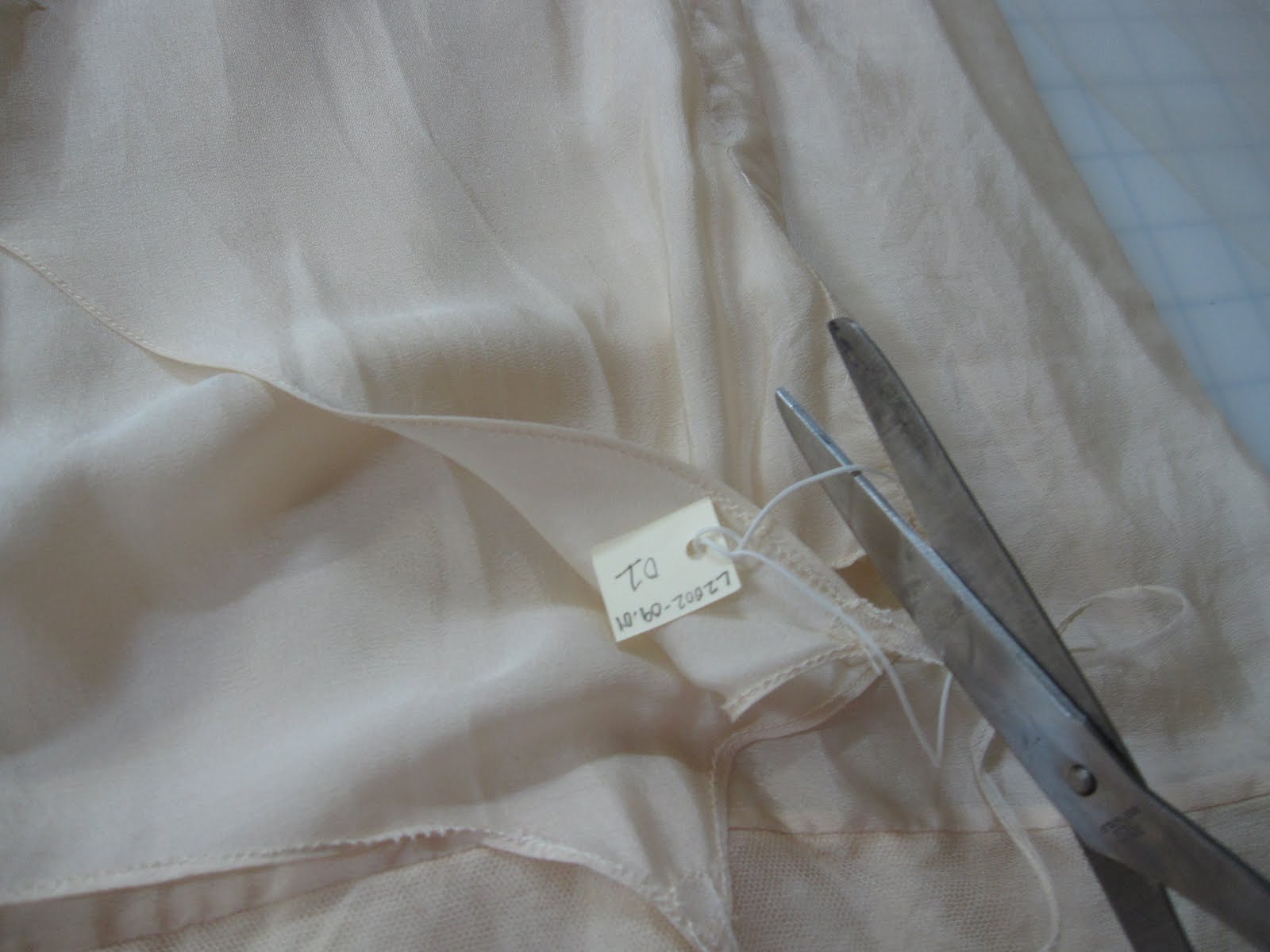
 Remove the tag with the loan number.
THE SLIP
Remove the tag with the loan number.
THE SLIP
I went ahead and placed the slip on the bottom layer of the box. (1) After lining the box with tissue paper, I laid the slip's skirt in the bottom of the box. (2) After padding the fold, I laid down the top half. (3) I then placed a layer of tissue paper on top.


 THE DRESS
(1) I did the same steps with the dress, padding the folds. (2) I also padded the shoulders and sleeves as well as (3) the fold of the belt.


 THE BOX
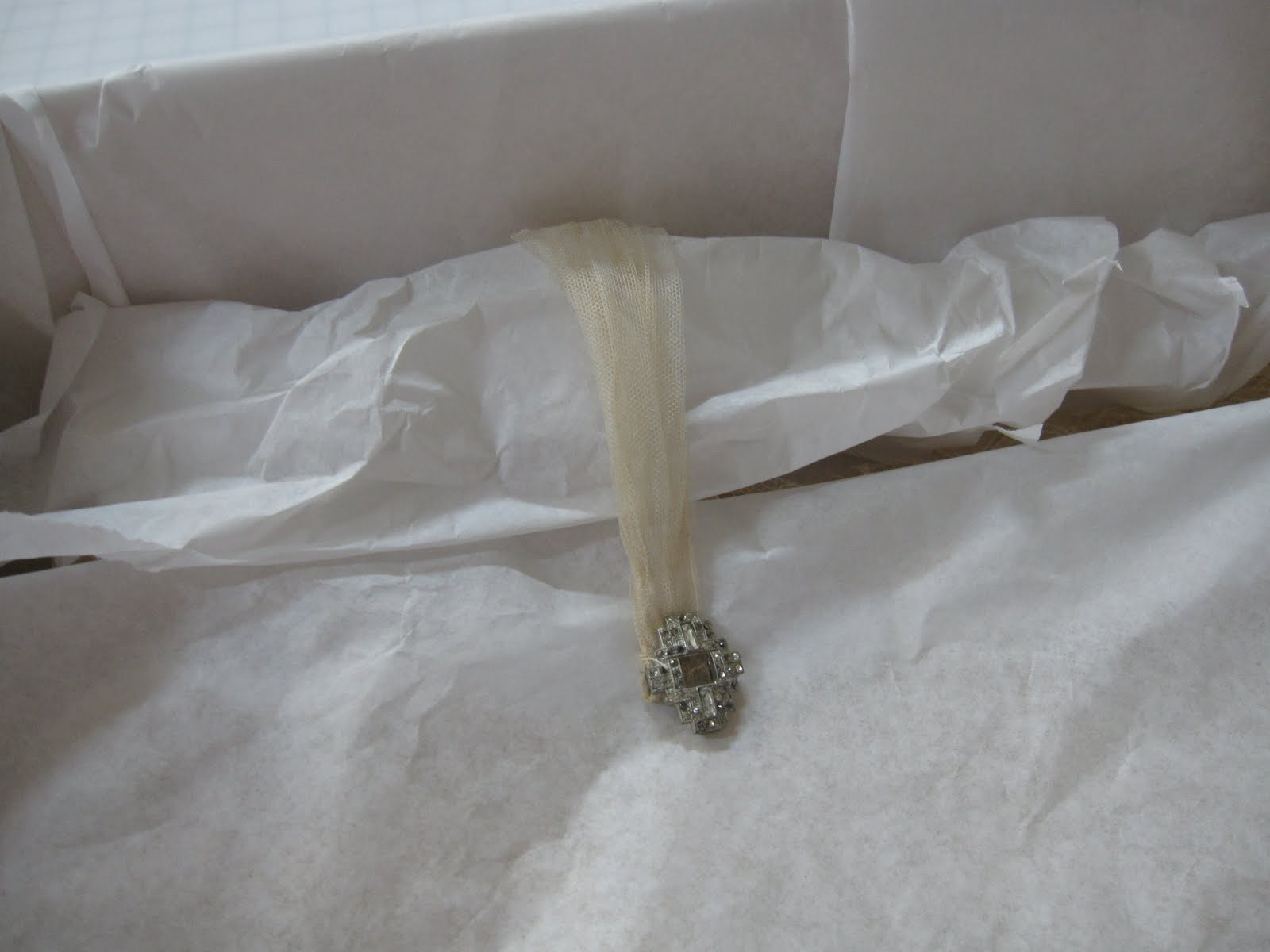
For the hat, I padded inside the crown (1) and around the brim (2). I then added padding in the rest of the box to protect the layers even more (3). Finally, (4) the box is ready for the lid.


 THE SHOES
I packed the shoes in their own box since Kathy's daughter wanted to try them on. Generally, they would be packed at the bottom layer of the dress box. However, in this case, it works better that they are packed separately. The shoes are heavier and more substantial than the slip and dress combined.
(1) I stuffed the toes of the shoes to protect them from being smushed. (2) and (3) I then placed the shoes in the acid-free tissue lined acid-free box, using more tissue paper to pad around and between the shoes. Finally, (4) the box is ready for the lid.


This process is really easy and simple to do. As I said before, it just takes the right materials and a bit of common sense. If you have an heirloom piece of clothing or a wedding dress that you want to protect for the long-run, I highly recommend you properly store it. Storing a fragile garment in the right conditions and environment will protect it for years to come.